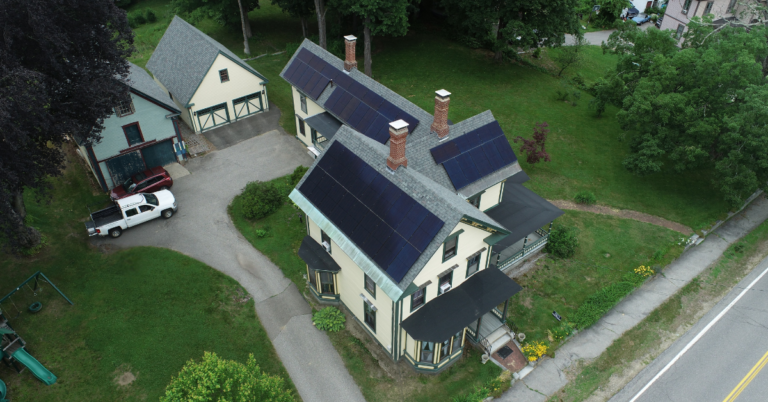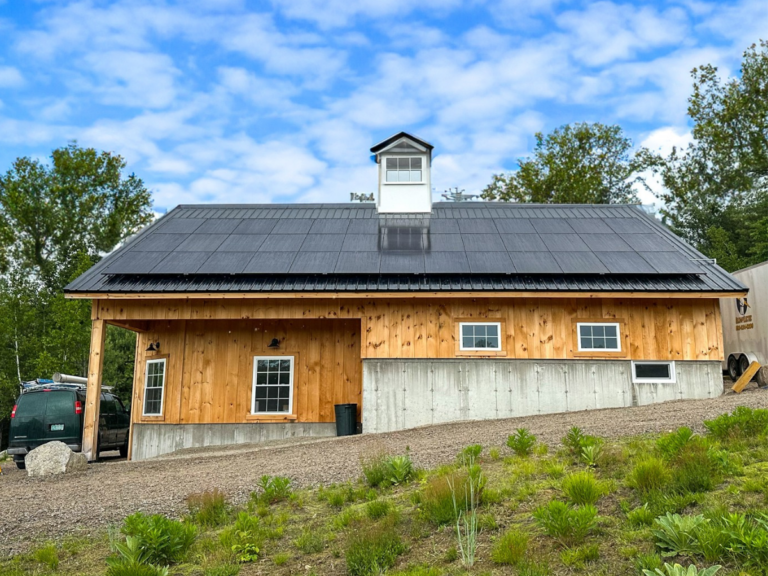
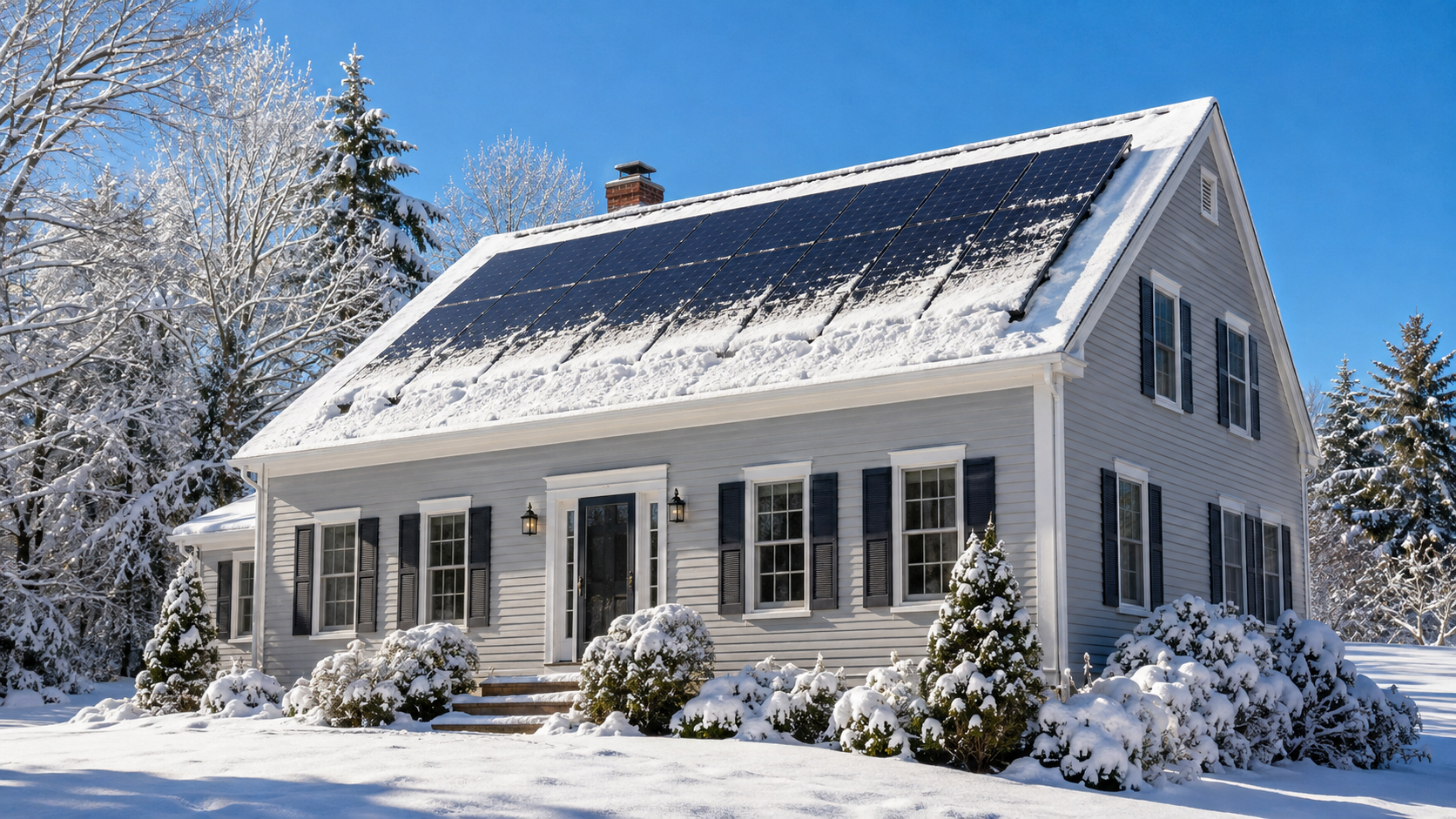
Winter in New Hampshire brings cold temperatures and plenty of snow. If you own a solar system, or are thinking about installing one, you may wonder how snow impacts your panels and what you should do when it starts to fall. Luckily, solar panels are built to handle winter weather and can keep your home powered year-round.
How does snow affect solar production?
Heavy snowfall can temporarily reduce production if it fully covers the panels. Thanks to their sloped angle and dark, smooth surface, snow naturally slides off once the sun begins to warm the panels. Because the panels heat up quickly in sunlight, even deeper accumulations often clear within a few hours after the storm passes and the sun returns.
Should I clear snow off my panels?
We do not recommend manually removing snow from your panels. It can be dangerous for you, and using a rake or other tool can damage the surface of your panels.
The safest and most effective strategy is simply letting the sun do the work. A day or two of reduced production during a storm is normal, and already factored into how we design your solar system.
Do I lose a lot of energy in the winter?
Winter production is lower than summer production due to shorter daylight hours and occasional snow coverage.
Most New Hampshire homeowners participate in net metering, which allows them to use accumulated credits from sunnier months to offset winter energy use.
Adding a home backup battery is also a great way to maintain reliable power and store excess energy when your panels aren’t producing at peak capacity.
Are solar panels built for snow load?
Solar systems installed in New England must meet strict building-code and engineering requirements for both snow and wind loads. All of the equipment we install is designed to withstand harsh weather conditions, ensuring safe, reliable performance throughout the entire year.
Final thoughts
Snow is a natural part of life in New England, and solar panels are built to handle it. While winter production looks different from summer, well-designed systems plan for that seasonality and continue to deliver clean, dependable energy year-round!